![White full logo.png]](https://help.virto.solar/hs-fs/hubfs/White%20full%20logo.png?height=40&name=White%20full%20logo.png)
Enter the financial inputs
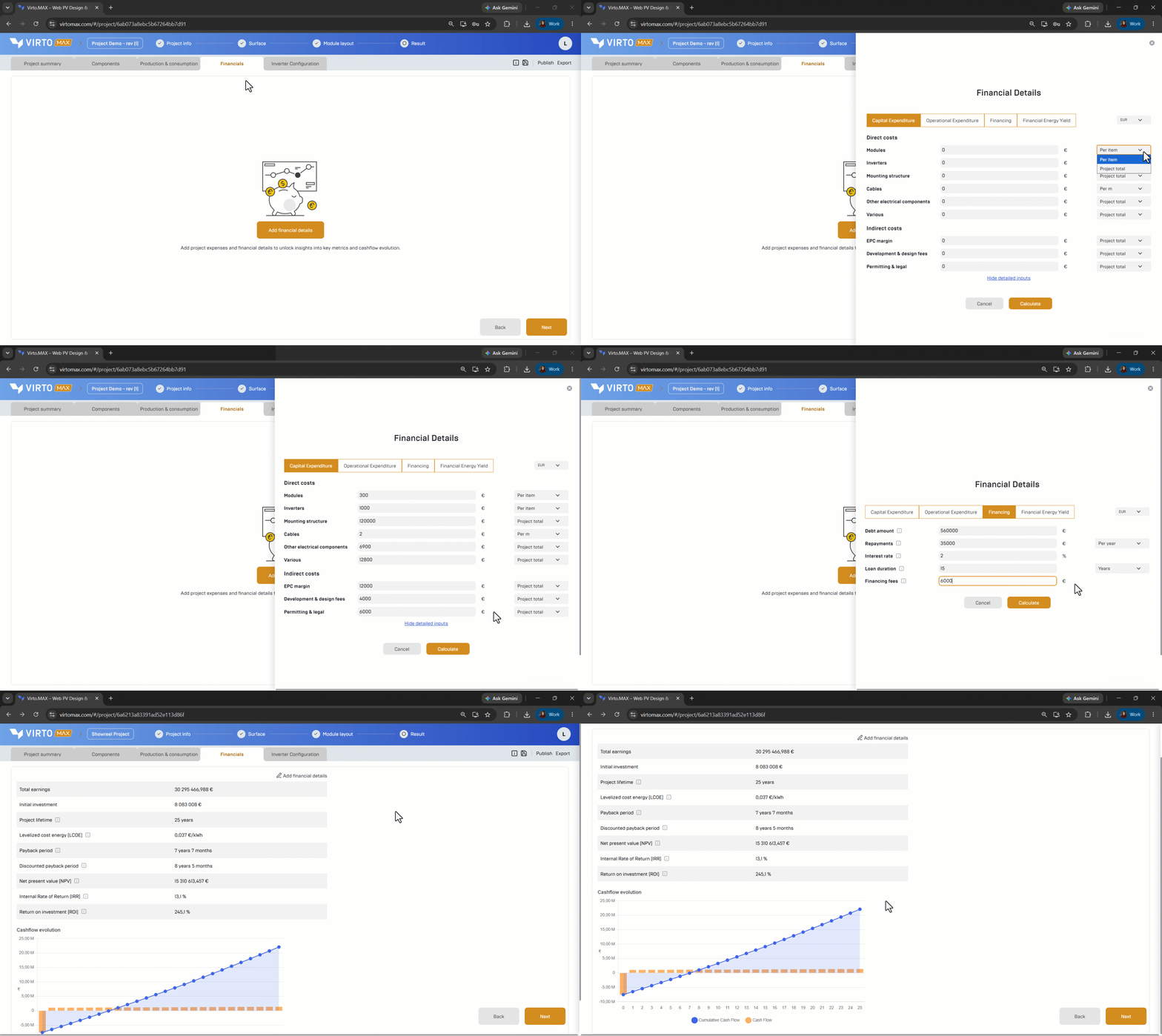
- Open the financial analysis section.
- Click on Add financial details
- Enter CAPEX with one of the available methods:
- A simplified average cost per kWp.
- A detailed cost breakdown for more advanced planning.
- Enter annual OPEX.
- Financing: Add financing fees paid at project start and the loan assumptions when financing is included.
- Financial Energy Yield: Confirm the project lifetime, discount rate, electricity price or tariff, and any annual change assumptions.
Good to know: You can adjust the currency in the top right
Financial metrics
Key definitions
- CAPEX: the investment cost required to develop the project, including financing fees paid at project start.
- OPEX: the costs required to operate the PV plant throughout its lifetime. In the Virto.MAX financial model, this can include operating costs and loan repayments.
- Energy: the annual PV energy injected into the grid for the financial calculation.
- Revenue: the annual financial value of the energy.
- N: the total number of operating years or project lifetime.
- year: the year for which a metric is evaluated, from 1 to N.
- r: the discount rate.
Let the net annual cash flow be: 
Total earnings
The sum of all project revenue over the selected period:

Initial investment
The total investment at project start:

Payback period
The first year in which cumulative undiscounted net cash flow equals or exceeds CAPEX:

The first year in which the discounted cumulative net cash flow equals or exceeds CAPEX:

Net present value (NPV)
The present value of project revenue minus the present value of project costs:

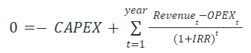
Internal rate of return (IRR)
The discount rate at which NPV equals zero:
Return on investment (ROI)
The net undiscounted return relative to CAPEX:

Levelised cost of energy (LCOE)
The discounted lifetime cost per discounted unit of generated energy:

For lifetime metrics, set the evaluation period to the full project lifetime, so year = N.
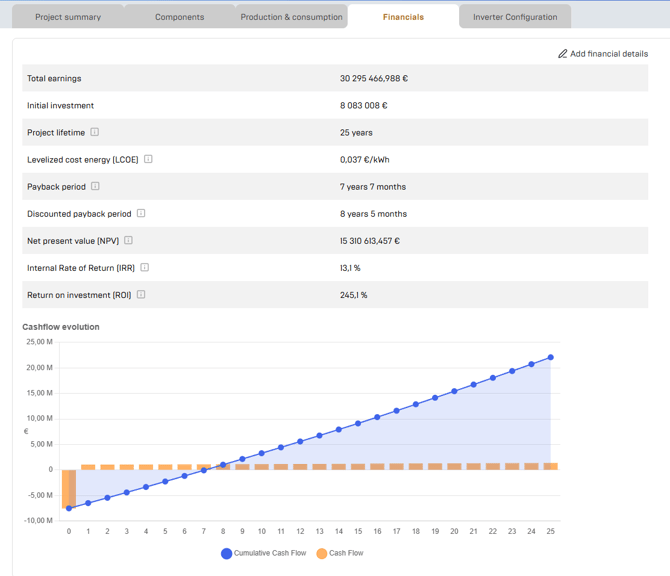
Review the result
Use the cash-flow graph and metric cards to compare scenarios. Change one assumption at a time when explaining why one layout, price, financing option, or battery size performs better than another.
Good to know: Financial results are only as reliable as their inputs. Confirm tax, incentives, tariff structure, depreciation, residual value, and financing treatment with the responsible financial specialist when they are material to the investment decision.
Next step: Review the project overview and create a report.