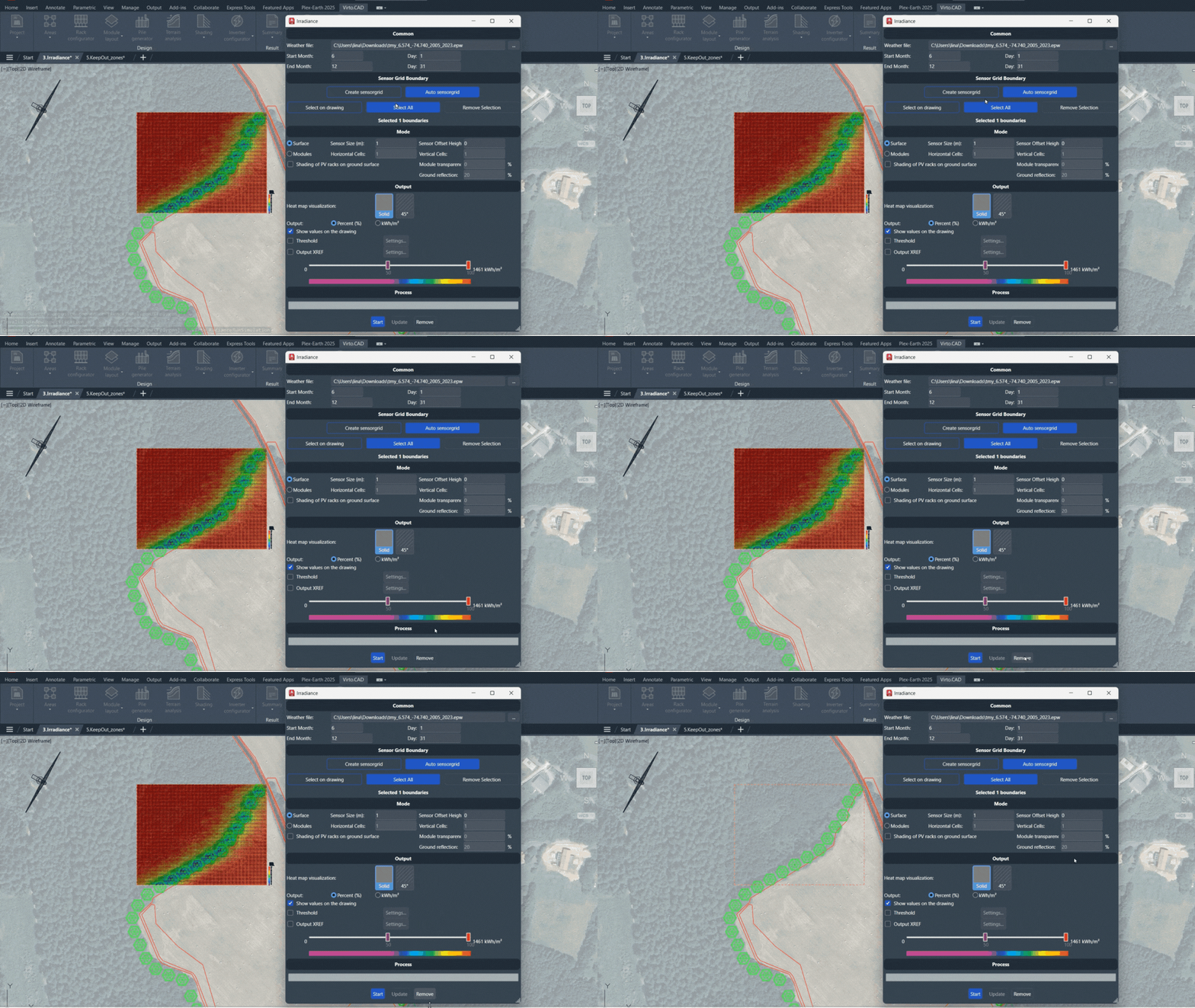
In this article, we will explore various irradiation analysis techniques that can help you determine the optimal positioning of your modules and racks.
Our shading tool allows you to conduct three distinct types of irradiation analysis for both ground and rooftop projects. Using actual irradiation data from your project's specific location, this tool considers all shading elements in the surrounding area, including trees, windmills, pylons, mounting racks, and the natural slopes of the terrain for ground projects.
To start you analysis:
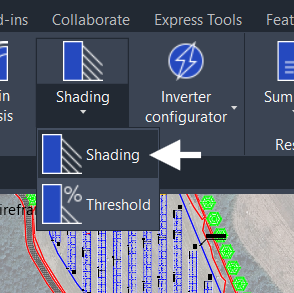
Open the "Shading" tool.
A new window will open. Select the three dots located on the upper right to upload a weather file in an .epw format which provides information of irradiation of an specific location for a long period of years. This file is found in different websites like: Energy Plus or PVGIS
Then specify the time period within the year for which you would like to simulate the irradiation data.

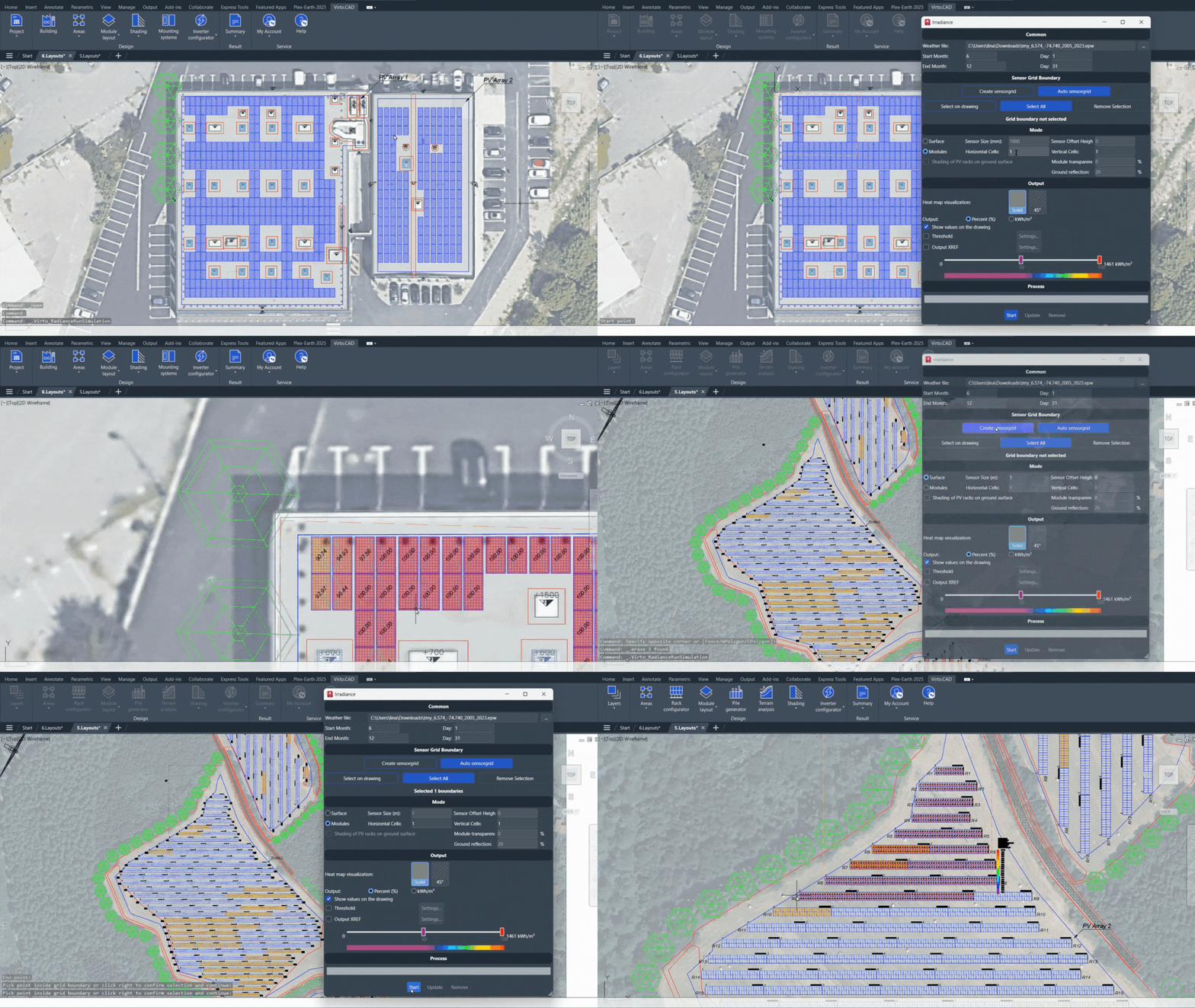
Create a sensor grid for the area you want to analyze by using the Create sensorgrid option. Alternatively, you can utilize the Auto sensorgrid feature to generate these grids easily on rooftops.
Once the sensor grid is established, ensure that you select it by choosing the Select on Drawing option or by clicking Select All.

After this you will need to select the type of irradiation analysis you would like to perform:
- Irradiation on Modules
- Irradiation on Surface
- Irradiation on Surface with shading from PV racks (AgriPV).
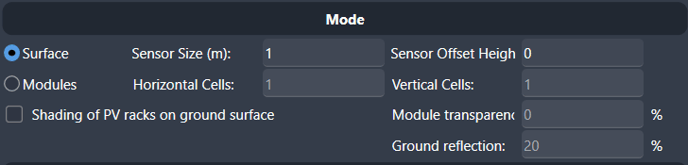
Irradiation on Surface
This analysis provides insights into the direct irradiation impacting the surface of your ground or rooftop project. You will have the option to define the sensor size and the height offset, allowing for tailored analysis specific to your project's requirements.
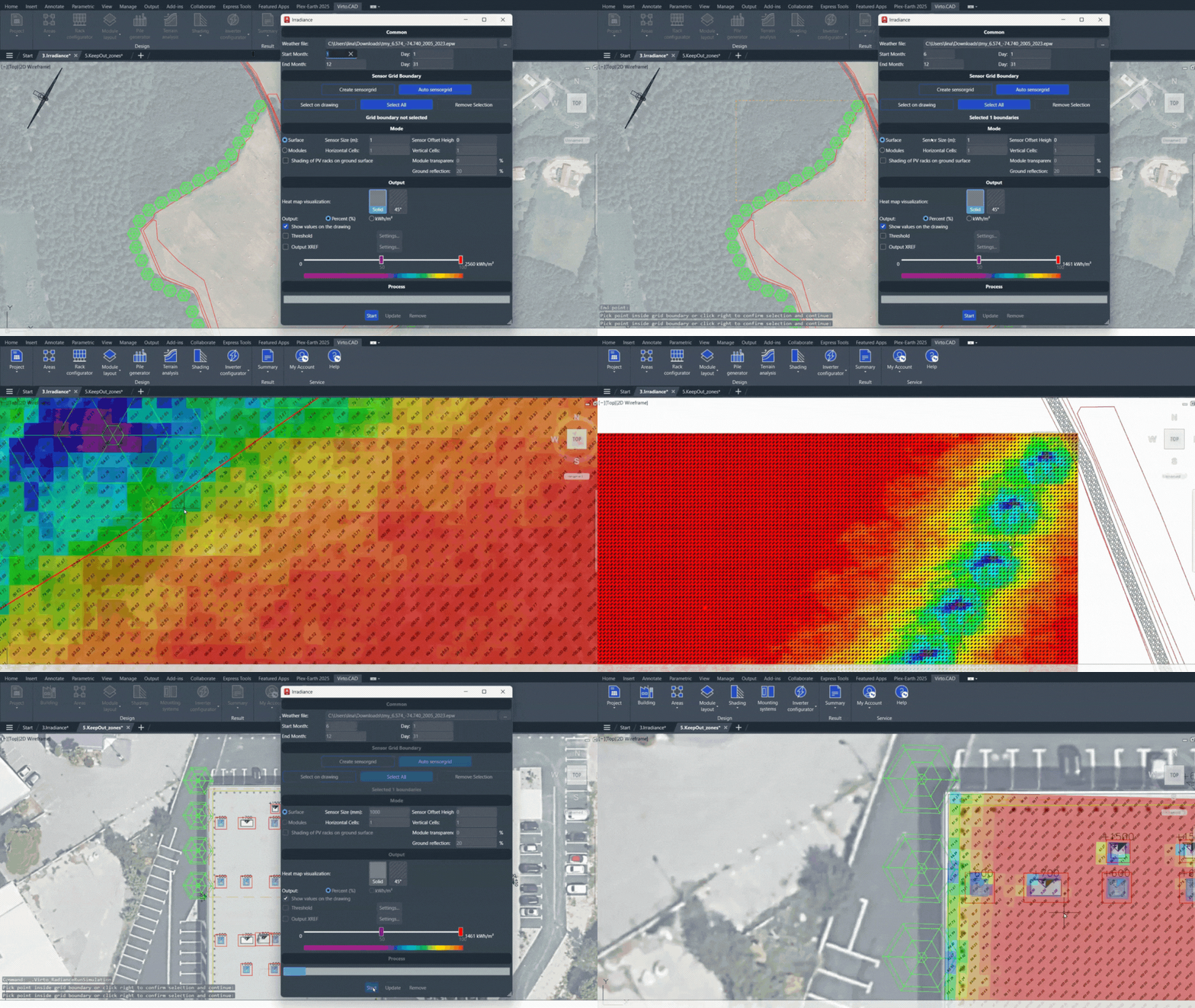
Irradiation on Modules
This analysis provides insights into the direct irradiation impacting the modules of your ground or rooftop project. You will have the option to define the sensor size by number of Horizontal and Vertical cells.
Irradiation on Surface with Shading from PV Racks
This analysis evaluates the direct irradiation affecting the surface of your ground or rooftop project while accounting for the shading created by the installed racks. It calculates the resultant irradiation on the ground after the sunlight has passed through the racks. In this mode, you will need to specify the percentage of module transparency and ground reflection to ensure an accurate analysis.
This type of simulation can for example be used for AgriPV systems.
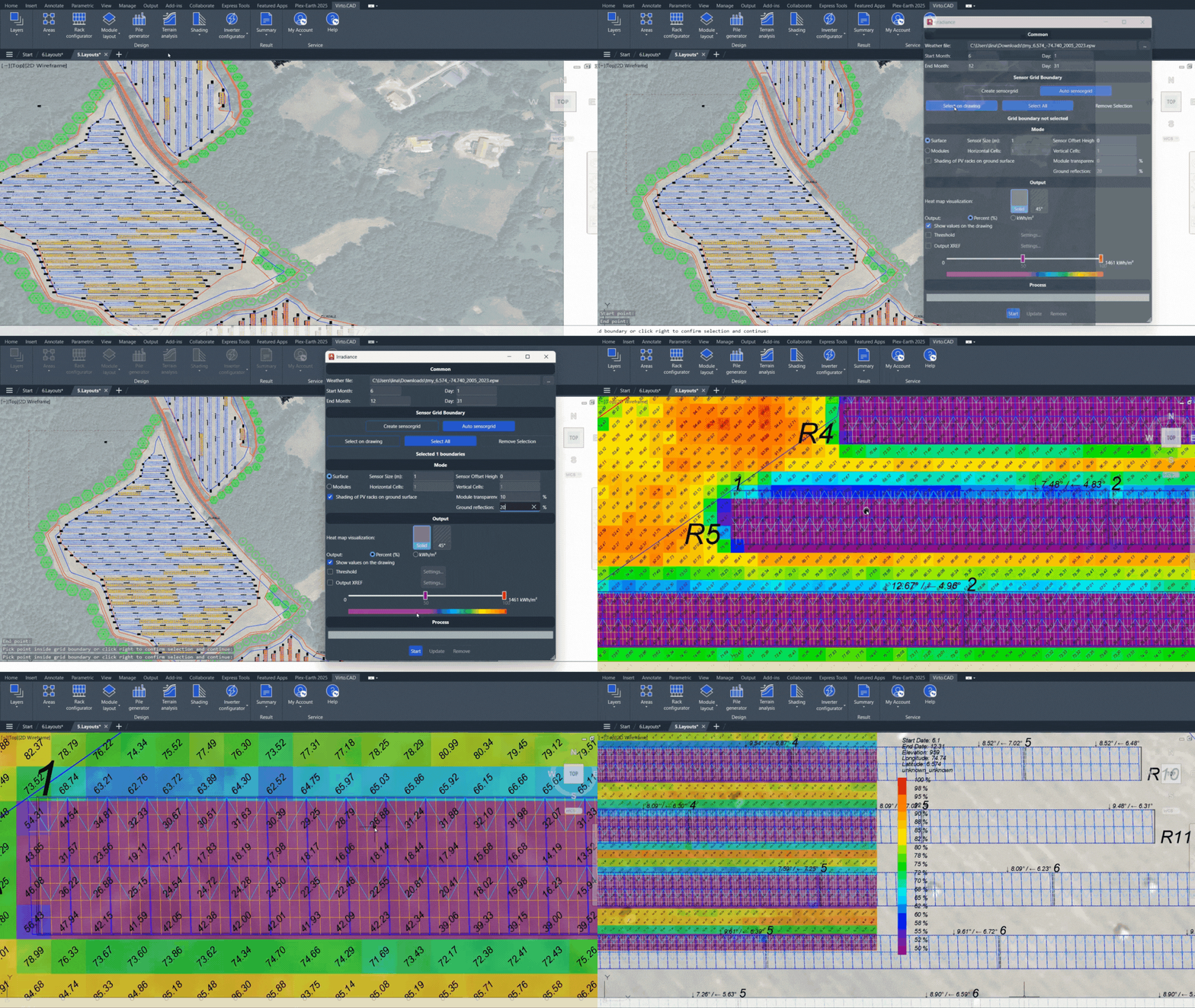
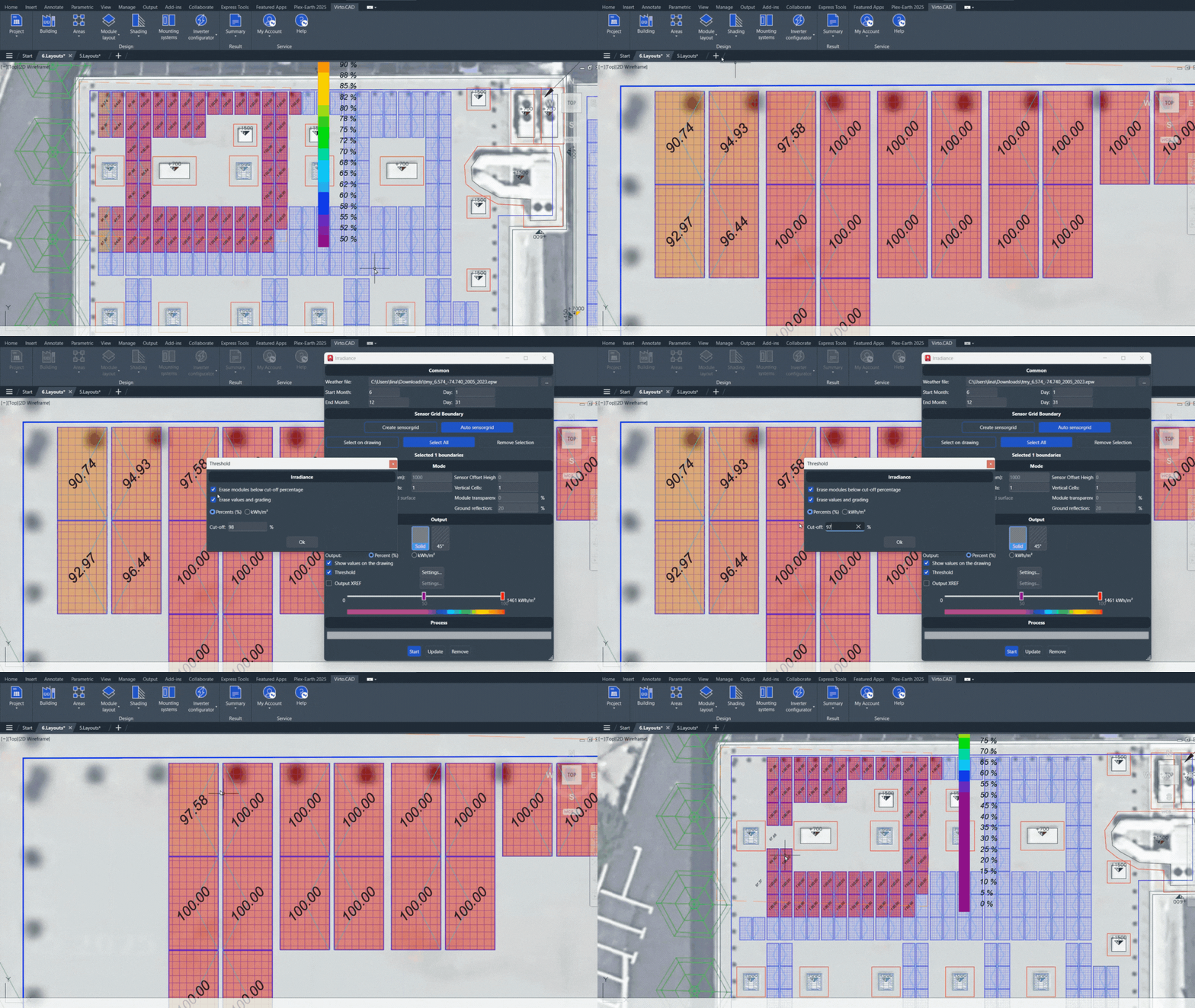
Now select your preferred format for displaying the output results. You can choose to view irradiation values either as a percentage or in kWh/m². Additionally, you have the option to show these values directly on the drawing or to display them through colorization only. You may also set a threshold to filter out certain results and choose to export the data as an Xref to save it on a different file.
More info on the threshold can be found here
To begin the irradiation simulation, click on the Start button.
If you need to remove any previous analyses, simply click on the Remove option to delete those results of the boundary selected.
To modify the settings of an existing analysis, use the Update button to make the necessary adjustments.